

Why Part of a Home Lost Power
|
What will cause lost electric power to part of our home? Electrical Problems that Could Cause a Home to Not Have Full Electrical Power or Abnormal Power. © By: Dave Rongey |
Lost Power to Part of a Home
Electrical Question #1: What will cause lost electric power to part of our home?
Example #1: We lost power to parts of our home. The ceiling light does not work, and the light over sink does not work, and a wall outlet does not work.
- I am hoping you can provide some insight. I have no idea how a three level town house is wired. Bedroom 1 of 2, the ceiling light, and two wall outlets do not work, there is no power supply.
- The 2nd floor bathroom over cabinet light does not work nor does the wall outlet in the Kitchen.
The ceiling light does not work, and the light over sink does not work, and a wall outlet does not work. However, the refrigerator and range etc. does work. - I did check the fuse box. Nothing has been tripped off. I also checked the GFCI reset buttons on the outlets in the two bathrooms.
- The above has been off for 6 days and then suddenly last night everything started working. But this morning the above does not work again. I understand that I need an electrician to come out but I need to wait for two weeks because I simply do not have the money though I am scared because of electrical fire danger etc.
Related Question: All my breakers are on but I don’t have power in all of the house.
We have lost power to part of our home. The electrical power goes out in a large section of my house, leaving the living room, the refrigerator and microwave still with power.
- After a while the power comes back on. The breaker box doesn’t have any tripped circuits and nothing seems to be wrong.
Related Question: After a power failure, when power came back on certain things will not work.
- After a power failure, when the power came back on the well pump, dryer, electric stove, all will not work. I reset all breakers and still no good. I am just trying to figure out if the issue is in the house or the power company.
This electrical wiring question came from Henry, a Homeowner in Green Lane, Pennsylvania.
Dave’s Reply:
Thank you for your Electrical Questions.
Troubleshooting Lost Power to Areas of a Home

Application: Lost Power, Half Power, Testing Home Electrical System and Circuit Wiring.
Skill Level: Advanced – a Licensed Electrical Contractor should be consulted right away.
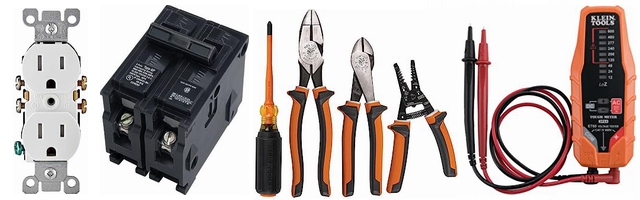
Tools Required: Basic Electricians Pouch Hand Tools, Ammeter and Voltage Tester.
Estimated Time: Depends on age of the home, the condition of the electrical system and available access to electrical components.
Precaution: Electrical troubleshooting of this level is best performed by a licensed electrical contractor who will identify the problem and make the necessary repairs.
Electrical Problems that Could Cause a Home to Not Have Full Electrical Power
- From what has been described in these electrical questions, there may be a problem either at the main electrical panel, or at a sub-panel which is affecting several other circuits and devices that are not working.
- Make sure the circuit breakers are in the full On position. If a circuit breaker does not appear to be in the On position it should be switched into the Off position, and then back into the On position.
- A qualified licensed electrical contractor will need to visually inspect the internal components of the electrical panel, and perform a series of tests at the main electrical service which will verify the integrity of various electrical connections and components.
- Once the faulty condition is identified then the necessary repairs need to be performed.
More about Electrical Troubleshooting
- Troubleshooting to Find Out Why Your Home Lost Power

-
How to Identify Lost Power
- Licensed Electrician Reveals the Secrets of Successful Electrical Troubleshooting Methods used to solve the majority of the home electrical problems and wiring failures encountered.
How to Use Electrical Testers
- Electrical Outlet Wiring

-
Wiring Electrical Outlets for the Home
- Home electrical wiring includes 110 volt outlets and 220 volt outlets and receptacles which are common place in every home. See how wiring electrical outlets for the home are done.
- Basic House Wiring Circuits

-
House Wiring Circuits and Circuit Breakers
- This article looks at common 120 volt and 240 volt house wiring circuits and the circuit breakers that are installed identifying the types and amperage sizes used in most homes.
Electrical Panel Circuit Listing - Wiring GFI Outlets
-
GFCI and GFI Wiring Diagrams
- The features and benefits of GFCI outlets and receptacles will give you a clear understanding of the importance why these safety devices are required by code to help protect you and your family against accidental electrical shock hazards.

GFCI Wiring - This list of articles will help you learn about the features and benefits provided by GFI and GFCI Receptacles and how they are wired.
The following may also be helpful for you:
|
|
Be Careful and Be Safe - Never Work on Energized Circuits!
Consult your Local Building Department about Permits and Inspections for all Electric Wiring Projects.


More articles about Electrical Repair, Electrical Wiring, No Power to Part of the Home and Home Electrical Wiring: |
|
| « Previous | Next » |
How to Make Safe Home Made Light Fixtures |
Why A Garage Receptacle May Not Be Working |