


Electrical Voltage 5.5 Readings on a Circuit
 '; ';
|
How to Identify and Repair a Voltage Feedback © By: Dave Rongey |
Understanding 5.5 Volt Electrical Readings
[ad#block]Electrical Voltage: Where is 5 volts coming from?
- I am changing receptacles on appliance circuit.
- I turned off all the circuit breakers for the kitchen area, 2 appliance circuits, 1 disposal +range hood circuit.
- I still show 5.5 volts at the #1 appliance hot line to the circuit breaker.
- Where is that voltage coming from?
This electrical question came from: Bruce, from Phoenix, Arizona.
Dave’s Reply:
Thanks for your electrical question Bruce
How to Identify and Repair a Voltage Feedback
Residual Electrical Voltage Readings
- Bruce, the 5.5 volt reading that you are seeing is most likely residual voltage that is being fed back through the neutral wire through inductive type devices that are connected to the electrical system which is then showing up on the line at the circuit breaker that you are testing.
- One way to prove this would be to unplug or disconnect any inductive type loads and the 5.5 volt reading should disappear. Inductive loads would include motors, transformers, even incandescent light bulbs, basically anything that would have a circuit path within the internal components of the device which could induce the current or permit a current path to flow between the hot and the neutral conductors of the circuit.
More about Electrical Wiring
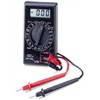
Understanding Electrical Testers
When working on home electrical wiring using voltage testers can play an important part in electrical safety. Electrical testers enable you to identify electrical circuits and help prevent the possibility of accidental electrical shock.
Types of Electrical Testers
Using Electrical Testers
The following may also be helpful for you:
Be Careful and Be Safe - Never Work on Energized Circuits!
Consult your Local Building Department about Permits and Inspections for all Electric Wiring Projects.
More articles about Electrical Repair and Home Electrical Wiring: |
|
| « Previous | Next » |
3 Way Switch Wiring Variations |
Ceiling Fan Wiring Diagrams and Optional Controls |