Battery Backup Systems
|
|
I need some information how to setup a battery backup system and connect it to the main switch…
© By: Dave Rongey
|
Planning for a Battery Backup System for Home Power
Background: Mike, a Homeowner from far far away (I just checked where you are from, and your right, that is far far away, good grief, but i’ll bet it’s very nice!)
[ad#block]Question: I just moved in a location in a corner of the globe that grid power is an extreme luxury.
I need some information about how to setup a battery backup inverter system and connect it to the main switch.
I need to support 3 light bulbs, a TV, a satellite receiver and a refrigerator.
The calculated operating amperage for the refrigerator is 4.5 . I do not know about the initial booting amps.
Thank You.
Dave’s Reply:
Thanks for your electrical question mike.
Mike, much more information is needed to plan this out. I installed a system like this on a very remote island in the Philippines a few years ago, there was no electricity at all so we set up solar panels with provision for a backup generator. I know that some of the technology has changed, but that does not change the fact that the voltage and watts or amp loads for the devices will be needed. I know that in your area of the world it is common to have 220 volt devices so that would need to be verified.
The Following links will assist you with your electrical question:
Grid Tied Inverters
Lighting For The Home
Lighting Electrical Codes
For more information about 220 Volt Wiring Diagram
220 Volt Wiring Diagram

Wiring 220 Volt Electrical Outlet
Home electrical wiring includes 110 volt outlets and 220 volt outlets and receptacles which are common place in every home. See how wiring electrical outlets for the home are done.
The following may also be helpful for you:
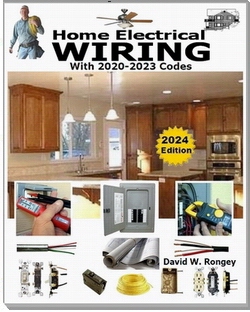
A Complete Guide to Home Electrical Wiring
Be sure to get your copy of my BIG Book:
Perfect for Homeowners, Students and Electricians
Includes:
Home Electrical Wiring - Room by Room
120 Volt Circuits
240 Volt Circuits
Multi-Wired Circuits
Wiring Methods for Installing Home Electrical Circuit Wiring
Electrical Codes for Home Electrical Wiring
....and much more.
|
Be Careful and Be Safe - Never Work on Energized Circuits!
Consult your Local Building Department about Permits and Inspections for all Electric Wiring Projects.
Electrical Tips to Help You Wire it Right
|

The Safest Way to Test Electrical Devices and Identify Electric Wires!
The Non-Contact Electrical Tester
This is a testing tool that I have had in my personal electrical tool pouch for years, and is the first test tool I grab to help identify electrical wiring. It is a Non-contact tester that I use to easily Detect Voltage in Cables, Cords, Circuit Breakers, Lighting Fixtures, Switches, Outlets and Wires. Simply insert the end of the tester into an outlet, lamp socket, or hold the end of the tester against the wire you wish to test. Very handy and easy to use.

The Quickest Way to Check for Faulty Electrical Wiring!
The Plug-In Outlet Tester
This is the first tool I grab to troubleshoot a problem with outlet circuit wiring. This popular tester is also used by most inspectors to test for power and check the polarity of circuit wiring.
It detects probable improper wiring conditions in standard 110-125 VAC outlets
Provides 6 probable wiring conditions that are quick and easy to read for ultimate efficiency
Lights indicate if wiring is correct and indicator light chart is included
Tests standard 3-wire outlets
UL Listed
Light indicates if wiring is incorrect
Very handy and easy to use.

Strip Off Wire Insulation without Nicking and Damaging the Electric Wire!
The Wire Stripper and Wire Cutter
My absolute favorite wire stripping tool that I have had in my personal electrical tool pouch for years, and this is the tool I use to safely strip electrical wires.
This handy tool has multiple uses:
The wire gauges are shown on the side of the tool so you know which slot to use for stripping insulation.
The end of the tool can be used to grip and bend wire which is handy for attaching wire onto the screw terminals of switches and outlets..
The wire stripper will work on both solid and stranded wire. This tool is Very Handy and Easy to Use.
|
Electrical Parts to Help You Wire it Right
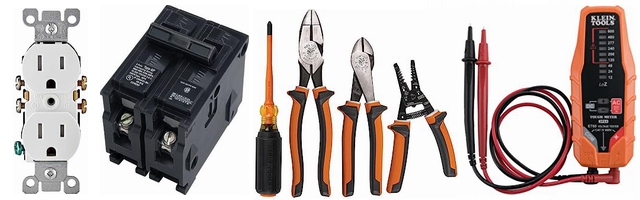
Residential Electrical Parts and Accessories
Light Switches
120volt Outlets
Circuit Breakers
Electrician Tools
Voltage Testers
|
More articles about Inverters and Home Electrical Wiring:
|
|
« Previous |
Next » |
|
|
|